Research from Play Their Way highlights strong demand among children for more opportunities to play and be active. The findings show a clear need for a new National Play Strategy to help create the conditions for healthier, happier and more active childhoods.
Play England and Play Their Way have called on the new Prime Minister Andy Burnham to revive the last Labour Government’s National Play Strategy to support current and future generations of children.
New research has revealed nearly half of children surveyed want to spend more time playing but barriers including time spent on social media and a lack of spaces safe spaces to play.
The call came on Playday - the UK’s national day for play and an annual celebration of children’s right to play now it’s 39th year. This year’s theme is Play - here, there and everywhere! It follows the government’s proposals for a social media ban for under 16s which are expected to become law in Spring 2027.
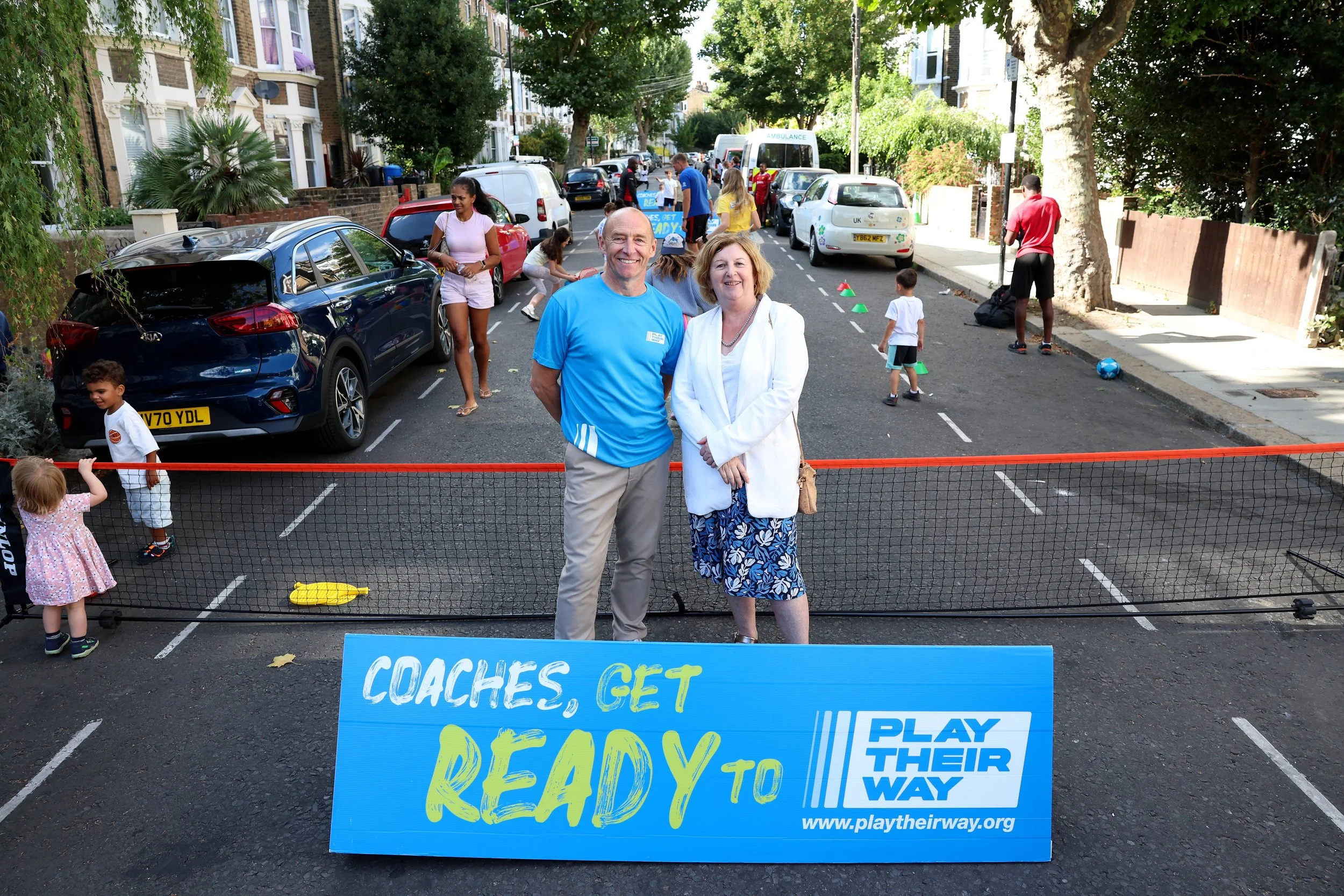
At a Playday event with local children in Westminster, Play England and Play Their Way, a national movement to transform the way children are coached in sport and physical activity through child-first coaching, urged the Prime Minister to finish the work he began in 2008.
Andy Burnham launched England’s first and only National Play Strategy in 2008. Backed by £235 million, it set out a national commitment to children’s play but was abandoned in 2008. Eighteen years after its launch, an entire childhood has passed without a national play strategy.
The organisations argue that action to reduce a phone-based childhood must be matched by action to restore the conditions for a play-based childhood, including the space, time, acceptance and rights children need to play.
The new Play Their Way research (IPSOS UK Coaching Study, March 2026), a study of over 2,000 parents and children looking at attitudes and barriers to play revealed that nearly three quarters (72%) of parents thought that children spent too little time engaged in active play whilst 49% of children said they would like to spend more time playing active games.
Over half (56%) of parents surveyed thought time spent on social media was a barrier to play for their children and 46% thought a lack of safe spaces to play was also a barrier, a view supported by 30% of children who took part in the research.
When it comes to taking part in sport, 40% of parents reported a child had stopped taking part in a sport because it was not fun enough highlighting the vital role played by coaches and child-first coaching, an evidence informed approach that prioritises fundamental rights of all children taking part in sport including their right to play.
Mark Gannon, Chief Executive, UK Coaching, said:
"Coaches have a vital role in helping our children reclaim and rediscover play that will not only increase the chances of them staying active but improve their mental health, wellbeing and development.
"This research has shown us that children want the opportunity to play more but that there are barriers to them being able to and many of them are dropping out of sport and physical activity because it’s not fun enough. We must address this.
"The government’s proposed ban on social media will help remove one of those key barriers, but to truly unlock the huge benefits of play for children we need to create more spaces for them to play and make sure their experiences of sport and activity are play-led. That can only be achieved by coaches adopting child-first coaching with puts children’s right to play at the centre of those experiences."
Dame Karen Buck, Chair, Play England, said:
"Children will play wherever opportunities arise, but too many are growing up without the freedom and conditions they need to do so.
"That means giving children the space and time to play, accepting their presence in our streets and neighbourhoods, and respecting their right to play as part of everyday life.
"Play England’s ten-year strategy - It All Starts With Play! sets out a clear objective: to restore a play-based childhood for all children in England by 2035. A new National Play Strategy would turn that ambition into coordinated action across government and help give children their childhood back."
Tom Hayes MP, Chair, APPG (All Party Parliamentary Group) on Play, said:
"Play is firmly back on the parliamentary agenda, with growing cross-party recognition that children need more space, time, opportunity and freedom to play.
"The Prime Minister understands the importance of this issue. He launched England’s first and only National Play Strategy in 2008 and now has the opportunity to renew that legacy and deliver lasting change for a new generation.
"Action to reduce a phone-based childhood must be matched by action to restore a play-based childhood. A new National Play Strategy would bring together the work needed across education, planning, health, transport and communities, and ensure that children’s right to play is reflected in the decisions that shape their everyday lives."
#ItAllStartsWithPlay!