More Play. Better Learning: new report calls for Play Sufficiency in Schools
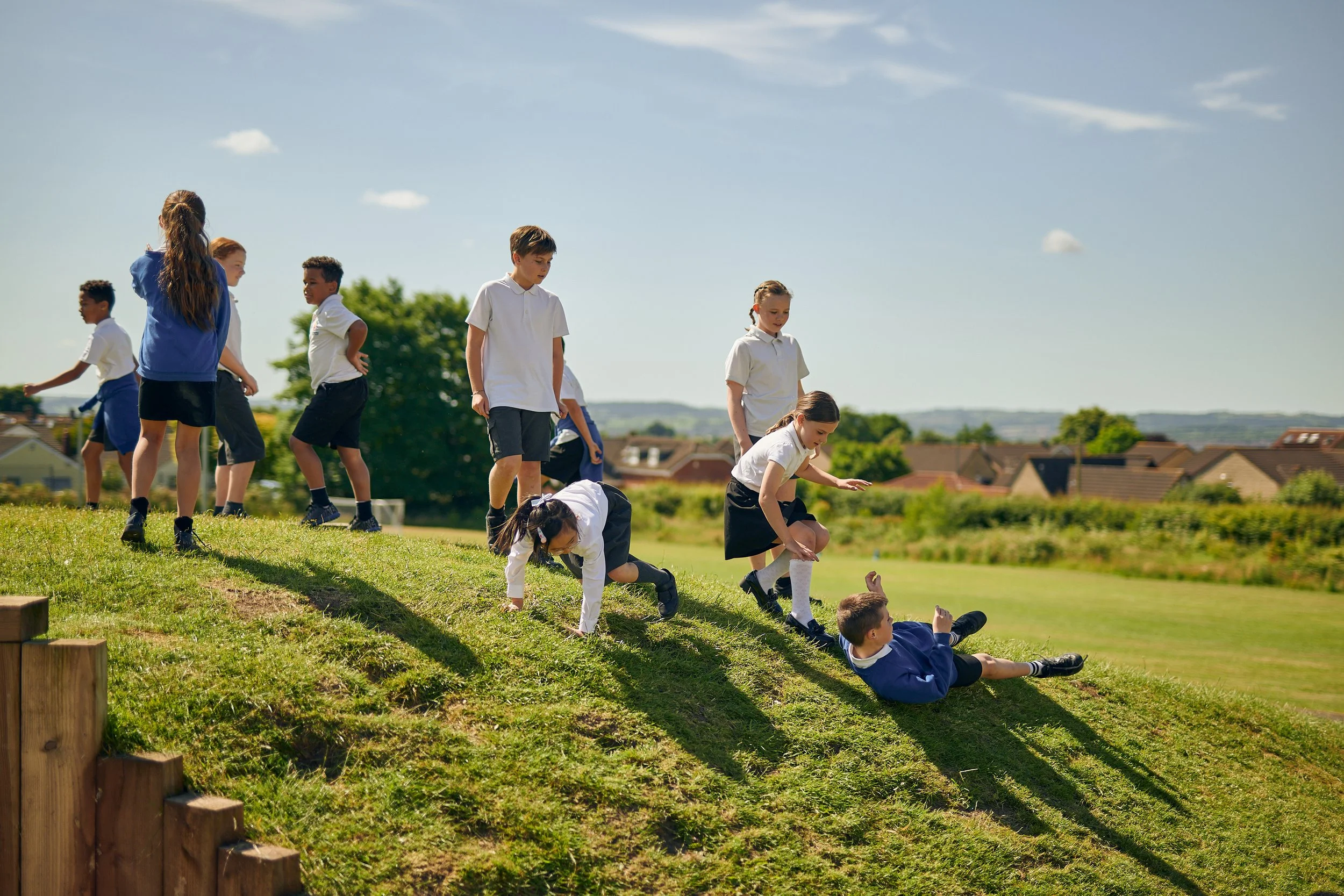
Photo credit: Many of the photographs used in the More Play. Better Learning summary report and website are courtesy of OPAL (Outdoor Play and Learning).
Play England and the Youth Sport Trust have published More Play. Better Learning, a new summary report making the case for embedding play sufficiency in England’s primary, secondary and special schools and Alternative Provision.
The summary report sits alongside a longer rapid evidence review prepared by Dr Wendy Russell and Ludicology. Together, the reports set out why play matters to children’s health, wellbeing, learning, school engagement and childhood itself.
The evidence is clear. Children’s opportunities to play have been squeezed out of everyday life, including in schools. Breaktimes have reduced, outdoor space is under pressure, teachers face heavy curriculum and accountability demands, and too many children lack the time, space and acceptance they need to play.
At the same time, schools are dealing with rising levels of anxiety, poor attention and engagement, persistent absence, widening inequalities, increasing SEND need and growing pressure on staff.
The report argues that outdoor play and playfulness can be part of the solution.
Play is not a distraction from learning
The report makes a clear case that play is not an optional extra, a reward, or a break from learning. It is one of the ways children learn, build relationships, regulate emotions, develop confidence and experience joy.
When children have the conditions to play in ways they value, they are not simply expressing wellbeing. They are actively generating it.
The report highlights the role of play in supporting:
physical activity and fitness
fundamental movement skills
emotional regulation
social connection and belonging
resilience
curiosity and openness to learning
better attention and engagement
improved school culture.
A practical route: Play Sufficiency in Schools
The report identifies play sufficiency as a practical, rights-informed approach to improving children’s wellbeing, learning and engagement across school life.
It means working towards every child having sufficient:
Space: accessible, inclusive and stimulating environments that are safe enough for children to play, explore and take appropriate risks
Time: predictable, protected and uninterrupted time for self-directed play every day
Acceptance: a school culture that values and actively supports children’s play
Rights-informed practice: school policy and practice aligned with Article 31, General Comment 17 and the wider UN Convention on the Rights of the Child
This approach supports Play England’s 10-year strategy, It All Starts with Play, which is focused on making play a normal, accepted and visible part of everyday life again.
Eugene Minogue, Executive Director of Play England, said:
“Childhood has changed. For too many children, opportunities to play freely have steadily diminished. Time has been squeezed, spaces restricted, and play is too often seen as something that happens only once learning is finished.
This report argues the opposite. Play is not separate from learning, wellbeing or childhood. Through play, children build friendships, solve problems, develop resilience, regulate emotions, explore risk and make sense of the world around them. Schools have a unique opportunity to protect and strengthen these experiences as part of everyday childhood.
Play sufficiency gives schools and policymakers a practical way forward. It asks whether every child has enough time, space, acceptance and rights protection to play in ways that matter to them, and what barriers prevent that from happening. Schools cannot solve the wider decline in children’s opportunities to play on their own. But they can become places where play is recognised as fundamental to learning, wellbeing and childhood itself.
That is why this work matters to Play England’s 10-year strategy, It All Starts with Play! If we are serious about giving children their childhood back, then more play must become a normal, accepted and valued part of every school day.”
Ali Oliver MBE, Chief Executive Officer, Youth Sport Trust, said:
“Today’s generation of children and young people faces an unprecedented wellbeing crisis, marked by rising mental health challenges and sedentary lifestyles. While we often search for complex interventions, the most powerful, evidence-backed solution is already right outside the classroom window: active play.
Play is not a luxury, an afterthought, or a reward for good behaviour. It is a fundamental right for children and a foundation of child development. For children, active play builds stronger bodies, stimulates cognitive function, and enhances classroom concentration. Just as importantly, the playground is a place where children learn empathy, build resilience, and discover the joy of physical and social connection.
For schools, play is a catalyst for academic success. Children who are active for the recommended 60 minutes a day are happier, healthier, and ready to learn. Integrating active play reduces disruptive behaviour, increases attention spans, and fosters an inclusive culture. Outstanding schools do not see play as a distraction from the curriculum, but as an essential part of it.
At the Youth Sport Trust, our mission is to ensure every child enjoys the life-changing benefits of play and sport. We cannot achieve this while millions of children remain inactive, particularly those from under-served communities who face the greatest barriers to movement.
This report is a call to action. We urge policymakers, headteachers, and communities to protect and prioritise active play as part of an active school day. Together, let us ensure school gates open to a world of movement, imagination, and joy, giving children back their childhood, one playtime at a time.”
Tom Hayes MP, Chair of the APPG on Play, said:
“Schools play a central role in shaping childhood. This report shows that protecting children's opportunities to play is not at odds with raising standards. It supports children's wellbeing, learning and development.
As Chair of the APPG on Play, I welcome the partnership between Play England and the Youth Sport Trust and this practical framework. I hope it encourages government, policymakers and school leaders to recognise play as an essential part of every child's education and childhood."
Next steps
Play England and Youth Sport Trust will now work with schools to develop practical tools that help embed play sufficiency within the everyday work of schools and the Youth Sport Trust’s Well Schools movement.
These tools will focus on the structural conditions that matter most: space, time, acceptance and the realisation of children’s right to play.
They will help schools understand what children do, how they experience their environments, and how practical changes can support wellbeing, engagement, learning and inclusion.
Read the summary report
Read the full evidence review
#MorePlayBetterLearning